
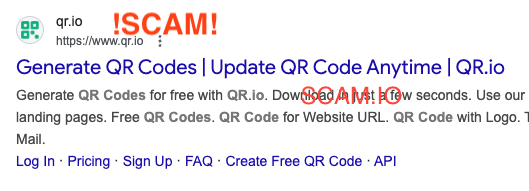
I was looking for a simple tool to solve a simple problem. I needed a QR code for a project I was working on and I did what most people do. I searched for a free generator. I found QR.io and the site looked polished. It promised a quick, easy, and free way to generate codes for my links. I spent the time customizing the design, picking the right colors, and making sure everything looked professional. I trusted the “free” label because that is how most of these tools work. They give you a basic feature for free and charge for the fancy stuff. I was wrong.
The immediate frustration hit me exactly seven days later. I went to check on my links and realized that everything I had built was dead. The service was not free at all. It was a ticking time bomb disguised as a helpful tool. I looked at my dashboard and saw the notification that my access was cut off. The moment I realized they had disabled my code was the moment I knew I had been played. Transparency is the most important thing in digital tools and this company has none of it. They lure you in with a promise of a free service and then they cut your legs out from under you once you have already committed to using their codes. This is a classic bait and switch that ruins the integrity of the web.
The 7-Day Trap: When “Free” Becomes a Liability
The first thing you need to know about QR.io is that their definition of free is a total lie. They say it is free but they disable my code after 7 days. I set everything up thinking I was good to go for the long haul. I had even shared the codes with a few people to test them out. Then, one week later, everything just stopped working.
Imagine you are a small business owner. You find this site and you think you found a great deal. You print five hundred flyers or a hundred business cards with these QR codes on them. You spend your hard earned money on physical marketing materials. Seven days go by and suddenly those five hundred flyers are literal trash. The codes do not lead anywhere because QR.io flipped a switch. This is not a trial. This is a trap.
When a company disables your content after such a short time without a clear warning during the signup process, they are holding your work hostage. I felt the gut punch of realizing that the work I did was now useless unless I pulled out my credit card. A 7-day expiration on a supposedly free service is a critical failure of trust. It is false advertising at its worst. They do not tell you clearly that your stuff is going to die in a week. They wait until you are invested and then they demand payment. This experience taught me that QR.io does not care about your workflow. They only care about the moment they can force you to pay for access to your own data.
The $35 Paywall: A Ridiculous Pricing Critique
Once they disable your stuff, they show you their real face. They do not ask for a few dollars. They want a ridiculous $35 per month to keep your codes active. Let that sink in for a second. Thirty-five dollars every single month just for a QR code service. It is a scam.
I looked at that price and I could not believe it. The cost to value ratio here is completely broken. To put this in perspective, you can get a full Adobe Creative Cloud subscription or a high end Netflix plan for less than what these people want for a simple redirect service. There is no world where a QR generator is worth that kind of monthly commitment. It feels predatory because it is predatory. They know they have your links locked away and they think they can charge a ransom to give them back. Here is why that pricing structure is trash:
- The monthly cost is higher than professional grade software suites.
- The value provided is basically a database entry and a redirect.
- It functions as a ransom fee for users who have already printed their codes.
- They hide the true cost of “staying active” until your content is already disabled.
Calling this price ridiculous is being kind. It is an insult to consumers. They are betting on the fact that you will be so desperate to save your marketing materials that you will pay their scam prices. I refuse to support a business model that relies on tricking people into a high cost subscription. It is an aggressive, anti-consumer tactic that should be called out at every opportunity.
Broken Promises: The Static Code Failure
You might think you can get around the drama by using static codes. In the world of QR codes, a static code is supposed to be permanent. It is a direct link embedded in the pixels of the code itself. It should not require a server or a subscription to work. But with QR.io, even static ones don’t work. This is where the service truly loses all its legitimacy.
I tried to create static codes to avoid the 7-day expiration nonsense. I generated the code and I pulled out my phone to test it. I held the camera up to the screen. I watched the lens hunt for focus. The yellow box appeared around the code but when I tapped the screen, nothing happened. No browser window opened. No link popped up. I tried it in different lighting. I tried it with a different phone. Nothing.
This is a fundamental failure of the product. If you cannot get a simple static code to function, you have no business charging $35 a month for anything. It was a physical manifestation of their false advertising. I sat there staring at a dead piece of technology that I had just spent time creating. If I cannot trust a basic static code to work, I cannot trust anything the company says. This is not just a glitch or a minor bug. This is a sign of a broken tool from a broken company. It is trash technology.
The Gotchas
There are several specific things that went wrong during this ordeal. I want to list them clearly so nobody else gets caught in this mess. These are the most critical takeaways from my time dealing with QR.io. Use this as a checklist of what to avoid when you are looking for digital tools.
- False Advertising Regarding the Price Point. They claim the service is free to get you in the door. They do not make it clear that your access is going to be cut off almost immediately. This is a dishonest way to run a digital business.
- Hidden Expirations on Created Content. They disable your code after only 7 days. This is not enough time to even test a service properly in a real world environment. It is designed to catch you off guard so you feel forced to pay.
- Functional Failures of Basic Technology. Even the static codes do not work. This means the service is technically incompetent. You are being asked to pay a high price for a product that is essentially broken at its core.
- Predatory Subscription Models. Charging $35 a month for a simple redirect is a way to exploit users who have already committed their links to physical print or active campaigns.
These “gotchas” are not just minor annoyances. They are signs of a company that is built on a foundation of deception. They want your money and they do not care if their product actually functions as advertised. They are banking on your frustration.
The Verdict
The final word on this is simple. F qr.io. I have no patience for companies that use these kinds of tactics to squeeze money out of people. They tell you it is free and then they hold your work hostage. They charge a price that is ridiculous and then they provide a product that is trash.
This entire experience has been a masterclass in how to treat customers poorly. If you are looking for a QR code, stay far away from this site. It is a scam. It is false advertising. They do not deserve your time and they certainly do not deserve $35 of your hard earned money every month.
My philosophy is that tools should be honest. If you want to charge for a service, then be upfront about the price. Do not lie and say it is free just to disable everything a week later. I am done with these predatory digital traps that try to trick people into expensive subscriptions. Save yourself the headache and the money. Use something else. There are plenty of honest tools out there that do not rely on these tactics. Anything is better than this.
Let me know in the comments if they got you or if my article could warn you before that.