
Why the Sony ZV1 is Still a Pro Video Steal (If You Fix These 3 Things)
The “Why”: Personal Motivation and the Jump to Manual
Moving from smartphone videography to a dedicated camera is how you stop being a hobbyist and start being an operator. While an iPhone is convenient, it cannot replace the tactile experience and manual control of a real camera system. I bought my Sony ZV1 used about three months ago and have put it through its paces every single day since.
This post may contain affiliate links. These links are marked with an * and I may earn a commission from qualifying purchases.
I wanted to escape the automated, processed look of mobile phone footage. I needed a tool that forced me to master real camera settings like ISO, shutter speed, and aperture. The ZV1 is a perfect entry point for manual shooting because it puts professional controls in a small, accessible package. It is the tool that helps you graduate from casual content into actual production.
The 4K Reality Check: Learning the Settings and the Limits
Understanding frame rates and file management is vital for any professional workflow. The ZV1 offers solid 4K image quality, though you are limited to 30 FPS. If you need slow motion, you can shoot 1080p at 100 FPS. This provides a clean, four times slow down without relying on trashy AI frame generation.
You must be smart about your storage costs to survive as a pro. Shooting 100 FPS constantly is a mistake that will break your drive and waste money on extra storage. I typically use the wind protection “deadcat” for outdoor audio by sliding it into the shoe adapter on top. This physical addition is a required step for getting usable audio in the field.
The camera is designed to be pocketable, with a flat lens that fits inside your jeans when it is powered down. If you keep the display tucked in, the physical act of opening the screen turns the camera on and extracts the lens automatically. This makes it a great daily carry tool, even before you start rigging it out.
The Overheating Hack: Making it a Professional Tool
Small cameras physically struggle with heat dissipation. To make this a reliable professional tool, you have to use software overrides. When I first unboxed this camera, I ran into a major issue immediately. The 4K recording was limited to only five minutes before the system would shut down.
You can fix this by diving into the menu settings. Change the “heat management” setting to “high” to allow for longer recording times even when the case gets warm. I also recommend keeping the display screen folded out while you are shooting. This allows the heat to dissipate easier from the camera body and prevents mid-shoot failures.
The lens physically extracts further when you zoom, which changes your aperture. This means you will need to take the extra step of adjusting your ISO to maintain your exposure. It is a minor annoyance, but mastering this manual dance is part of the professional learning curve.
The Essential Rig: SmallRig Cages and Power Management
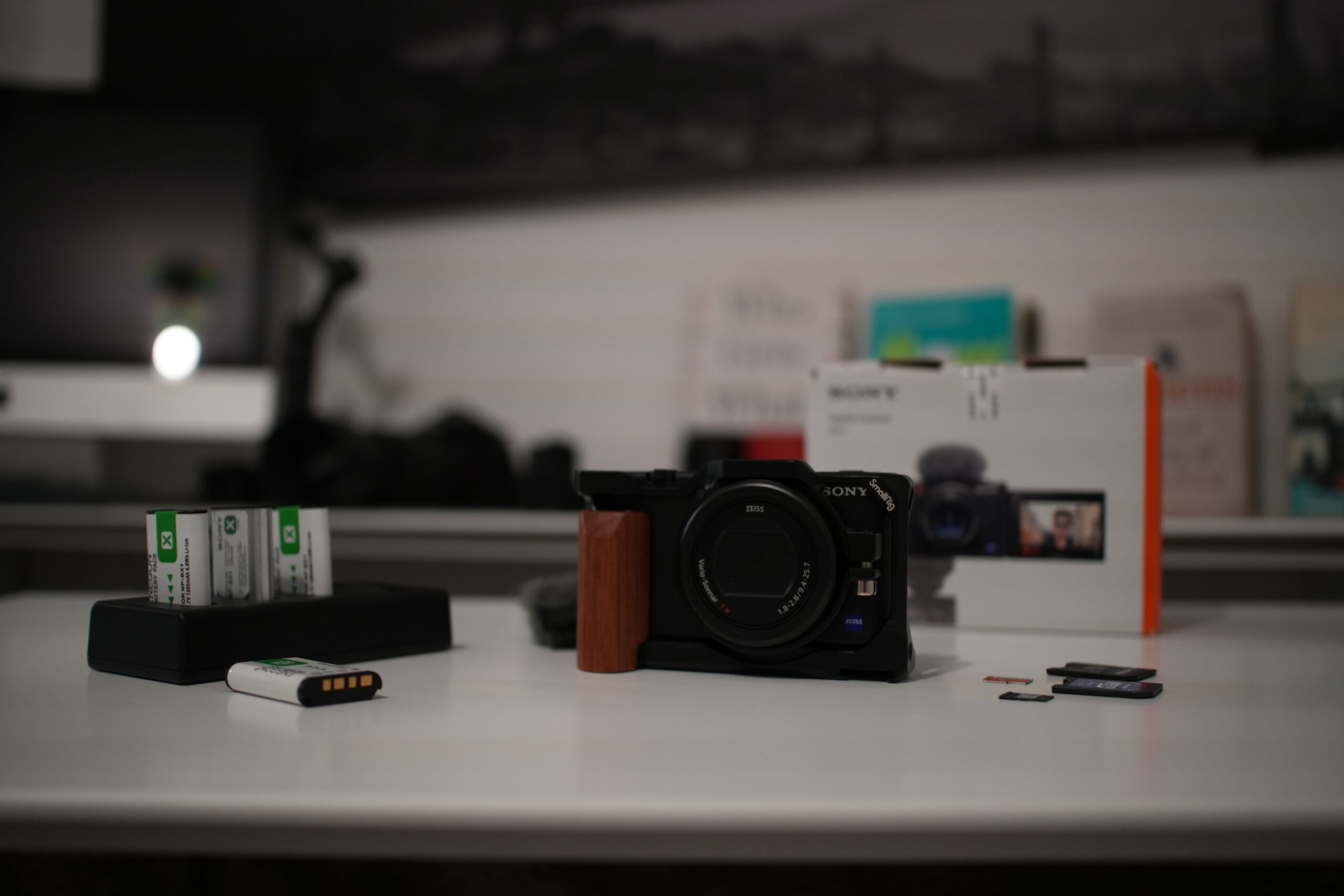
Manufacturer design oversights can ruin a professional shoot if you do not fix them. The battery life on the ZV1 is absolute trash. It uses tiny NPBX1 batteries that do not last nearly long enough for a serious workday. I solved this by buying an Amazon charger that came with three extra batteries.
Having four batteries allows me to survive a two to three hour shoot without any stress. The tripod mount design is also incredibly annoying. It is positioned so close to the door that any tripod plate will block your access to the SD card and battery. I fixed this by slapping on a cheap SmallRig cage and I pretty much never take it off.
The SmallRig cage provides several professional benefits:
- Full access to the battery and SD card door while the camera is mounted to a tripod.
- Side mounting points that allow you to mount a plate for native vertical video.
- Extra weight that makes the camera easier for gimbal motors to balance.
The “Gotchas”: What Sucks and What to Avoid
Professional gear reviews require total transparency about what sucks. The battery life is the biggest hurdle if you refuse to buy spares. You also need to watch the “crop” factor. If you turn on Active Stabilization, the camera crops the image substantially, making your wide shots much tighter than you planned.
The stabilization is mostly useful for canceling out micro-jitters. It is not magic, so you still need to do the “ninja walk” because this camera is not built for running. The internal microphone is better than a standard DSLR, but it can still get noisy. I always prefer using the 3.5mm audio input for a mic mounted on the person.
The 3.5mm jack is a must-have feature that prevents the annoying process of syncing audio to a phone later. Finally, if you use a gimbal like the RS3 Mini, you must balance the camera while the lens is out. When the lens extracts, the weight distribution shifts significantly. If you balance it while the camera is off, the gimbal motors will struggle and potentially fail.
The Verdict: Is the ZV1 Worth It?
The Sony ZV1 is a super awesome value in the current market, especially if you hunt for one on eBay. You can save a lot of money and still own a tool that performs at a professional level. It holds up well against newer models once you address the physical design flaws.
This camera becomes a legitimate workhorse once you add the top three accessories: extra batteries, a SmallRig cage, and a gimbal. These additions fix the manufacturer’s failures and turn a flawed product into a professional asset. Subscribe for more Sony content and check out my linked update videos for more gear tips.